


As a business owner, cash flow forecasting is essential for predicting your company's financial future.
As your business grows and financial complexity increases, this becomes an essential tool for maintaining control and making confident decisions.
This guide covers:
- What is a cash flow forecast?
- Why cash flow forecasting matters for growing businesses
- Cash flow forecast template (step-by-step)
- Cash flow forecasting example (13-week rolling forecast)
- Common cash flow forecasting mistakes
- Final checks for your forecast
- FAQs on cash flow forecasting
- Final words

What is a cash flow forecast?
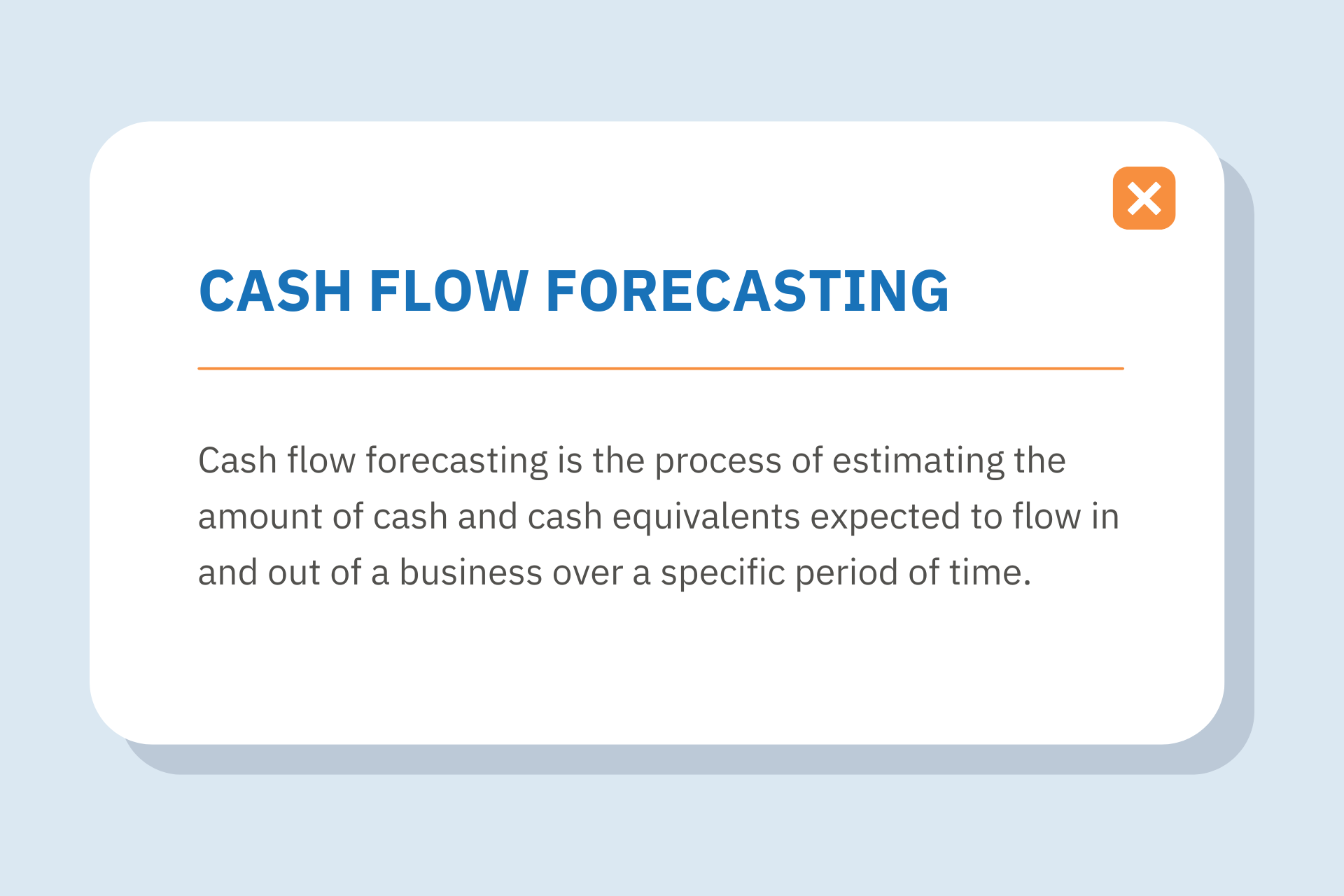
A cash flow forecast estimates the money coming into and going out of your business over a future period, helping you anticipate shortfalls and plan with confidence.
It reveals the ebb and flow of money in and out of your business, providing a clear picture of its financial health now and in the future. It's a dynamic tool, not a one-off exercise, that should be continually updated with actual figures to maintain an accurate view of your cash position and to practise effective cash flow management.
Why Cash Flow Forecasting Matters For Growing Businesses
Cash flow forecasting is indispensable for maintaining a healthy financial position and improving your cash flow as a growing business.
As your business expands, forecasting becomes less about tracking cash and more about managing complexity and reducing risk.
- Payroll and overheads become fixed commitments
- Payment cycles become less predictable
- Financial decisions carry greater impact
For growing businesses, forecasting shifts from a helpful tool to a core part of financial control.
A cash flow forecast allows you to:
- Identify and prepare for potential shortfalls: Proactively address challenges before they escalate.
- Prioritise payments: Ensure timely payments to suppliers and employees.
- Avoid cash shortages: Prevent the detrimental effects of unexpected financial strain.
- Make informed decisions: Confidently navigate investment opportunities, expansion plans, and financial strategies.
Simply put, cash flow forecasting offers numerous benefits that are vital for the success of your business. It's a proactive step towards improving your financial well-being and securing a prosperous future.

Cash Flow Forecast Template (Step-by-Step)
To get you started, here's a simple template you can follow:
1. Determine the time period for your forecast
Choose a timeframe for your forecast, typically starting with 12 months, to account for seasonal variations and annual trends.
2. List all income sources
Detail all sources of incoming cash, including sales receipts, investment interest, loan funding, etc. Use your sales forecast to estimate revenue and consider credit terms that may affect the timing of payments.
3. List all expenses
Review past bank statements to identify recurring expenses like supplier payments, wages, rent, utilities, and loan repayments. Factor in payment terms with suppliers to accurately predict outgoing cash flows.
4. Include VAT
If your business is VAT registered, incorporate VAT into your income and expense figures. Estimate VAT payments or refunds to HMRC for the relevant quarter.
5. Continuously update and review
Regularly adjust your forecast based on actual cash flows. This ongoing process refines your predictions and ensures accuracy over time.
Cash Flow Forecasting Example (13-Week Rolling Forecast)
A popular approach is the rolling 13-week cash flow forecast. This method offers a balance between accuracy and forward-looking visibility.
Below is a simplified example of a rolling cash flow forecast used by many growing businesses to maintain short-term visibility.
| Period | Week 1 | Week 2 | Week 3 | Week 4 | ... | Week 13 |
| Cash Inflows: | ||||||
| Sales (Cash) | £5,000 | £8,500 | £6,200 | £7,800 | £9,000 | |
| Sales (Credit) | £12,000 | £15,000 | £10,800 | £13,200 | £14,400 | |
| Loan Drawdown | - | - | - | - | - | |
| Other Income | £500 | £300 | £450 | £250 | £600 | |
| Total Cash In | £17,500 | £23,800 | £17,450 | £21,250 | £24,000 | |
| Cash Outflows: | ||||||
| Raw Materials | £3,500 | £4,200 | £3,800 | £4,500 | £4,800 | |
| Wages | £6,000 | £6,000 | £6,000 | £6,000 | £6,000 | |
| Rent & Utilities | £1,200 | £1,200 | £1,200 | £1,200 | £1,200 | |
| Marketing | £800 | £1,000 | £900 | £850 | £950 | |
| Loan Repayment | £1,000 | £1,000 | £1,000 | £1,000 | £1,000 | |
| VAT Payment | - | - | - | £4,800 | - | |
| Total Cash Out | £12,500 | £13,400 | £12,900 | £18,350 | £13,950 | |
| Net Cash Flow | £5,000 | £10,400 | £4,550 | £2,900 | £10,050 | |
| Opening Balance | £10,000 | £15,000 | £25,400 | £29,950 | (calculated) | |
| Closing Balance | £15,000 | £25,400 | £29,950 | £32,850 | (calculated) |
5 More Tips to Simplify Forecasting:
- Forecast Monthly: Gain more granular insights into your cash flow patterns.
- Embrace Automation: Utilise tools like Xero or Quickbooks to streamline the process.
- Categorise Accounts: Group similar accounts for easier management and analysis.
- Use Rolling Forecasts: Employ both 3-month and 12-month rolling forecasts for greater flexibility and adaptability.
- Compare and Refine: Regularly measure your actuals against your forecasts to improve your forecasting accuracy over time.
- Seek Expert Guidance: Partner with a trusted advisor, like a TAB business coach, for personalised support.
Common Cash Flow Forecasting Mistakes
- Overestimating future revenue
- Ignoring timing differences in payments
- Treating forecasting as a one-off exercise
- Failing to update forecasts regularly
- Not factoring in tax liabilities
Final Checks for Your Forecast
Before finalising your cash flow forecast, there are a few things to keep in mind:
- Include Irregular Payments: Factor in annual Corporation Tax and quarterly VAT payments.
- Choose the Right Timeframe: Tailor your forecast period to your specific business needs, whether it's 12 months or multiple years.
- Consider Automation Software: Explore tools like Xero or Quickbooks to automate cash flows and simplify forecasting.
- Account for Cost Increases: Include price inflation and other rising costs to ensure accuracy.
FAQs on Cash Flow Forecasting
What is the purpose of a cash flow forecast?
To help businesses anticipate cash shortages and make informed financial decisions.
How often should a cash flow forecast be updated?
Typically weekly or monthly, depending on the size and complexity of the business.
What is a 13-week cash flow forecast?
A short-term forecasting method that provides detailed weekly visibility over a rolling 13-week period.
Final Words
Effective cash flow management is crucial for business success, especially for SMEs. By actively monitoring and forecasting your cash flow, you can make informed decisions, mitigate risks, and ensure your company's long-term sustainability.
For many business owners, forecasting is the first step. The real value comes from using that insight to make better decisions across the business.
If you're running a growing business and want to strengthen your cash flow management, TAB's peer advisory boards provide practical, impartial support to help you plan with confidence.
Related articles

Cash Flow Management: How to Take Control in a Growing Business
Here's a solid framework of cash flow management, especially for growing businesses, including the most common cash flow mistakes growing businesses make.
How to improve cash flow in a growing business (5+ Employees)
Cash flow is one of the most common, and most misunderstood, challenges facing growing businesses. Find out how to improve and take control of your cash flow.

Nine Signs Your Business Is Too Dependent on You (and What to Do About It)
Are you becoming your business' bottleneck? This guide explores nine signs of owner dependency and how to reduce it to increase your business' value and your own capacity.

Company Culture Examples: What SMEs Can Learn from Real Businesses
Discover real company culture examples and practical tips to build a thriving workplace in your small or medium-sized business.

10 Proven Strategies for Organic Business Growth
Discover effective strategies for achieving organic business growth. Boost your business' success with actionable tips and insights for sustainable growth.