


I’ve worked with two business owners in the past few weeks and discussed similar challenges… What happens when they’re not there?
One is running a hundred person company and moving towards £10m in revenue. They didn’t feel they could take longer than a week off without the company breaking.
The other is running a fourteen man team, a couple of million in revenue. We were planning for him to take a five week break over the summer. He’s never before gone beyond 2 weeks.
Either way, size alone doesn’t make a business any less dependent on the owner.
For both, the challenge is real.
Maintaining sales, dealing with people issues, keeping an eye on quality, handling the inbox, managing the finances.
Business owners know that trust and delegation to their team is the only way their businesses will grow. However, if that’s to be effective you need an aligned team.
It’s only then that you can stem the flow of every significant decision coming back to the boss.
In this article:
- What is team alignment anyway?
- Why capable teams still become dependent
- Five things your team needs to act without you
- The real test of strategy: can you team act without you?
I’ve been there. The strategy looks good on paper (or a bunch of slides). Vision, values, KPI’s, forecasts. Valid and needed. The real test comes when you, as the leader, are not in the room.
Are the team aligned enough to still make good decisions without you there?
What is team alignment anyway?
Business books and a quick Google search will define team alignment as something like every team member understanding a vision, knowing their role and working together to meet organisational objectives.
That’s true, but I don’t believe that’s where it ends.

The team might buy into the vision. The team could broadly understand where the business is heading. People are capable, committed and busy. Yet somehow, you find they lack the confidence to make the important decisions and so they still come back to one person – YOU!
- Pricing to be agreed
- Client issues with invoicing
- A people performance issue
- A key opportunity goes sideways
Individually, none of these are dramatic.
Collectively, they create drag across the business and leave that familiar feeling that the business still depends too much on you – the business owner.
Strategy needs execution
As a result, strategy only becomes useful when it flows through to execution, helping people make better decisions. Vision is rarely enough to guide day-to-day judgement.
-
If a customer wants something urgently, should the team bend over backwards to deliver it?
-
If a sales opportunity brings revenue but poor margin, should they take it?
-
If a project is running late, should the priority be speed, quality, communication or cost control?
-
If two departments want different things, which priority wins?
These are the moments where team alignment either becomes real or stays theoretical.
If the owner is the only person who can interpret the strategy into the day to day, then the business is not truly aligned. The owner’s judgement is still trapped in their head.
That works fine in the early stages of a business, it is often necessary. The founder or MD knows the customers, the finances, the risks and the trade-offs better than anyone else. However, it soon becomes a constraint.
For the MD, the question changes from:
“How do I make the right decision?”
to:
“How do I help others make good decisions without everything coming back to me?”
🔹 Related: Build a High-Performing Leadership Team That Drives Results
Why capable teams still become dependent
From my experience in business and as a TAB business coach, there are three common reasons teams keep coming back to the business owner.
1. The owner has become the default decision-maker
The owner gets used to being close to everything because that is what helped the business survive.
The team gets used to asking because that is how things get approved.
They ask because experience has taught them that important decisions eventually get reviewed, changed or pulled back to the owner.
It becomes habitual within the business and the result is a business that can only move as quickly as the owner can respond.
2. The priorities are not clear enough
Many teams understand the broad direction and vision of the business but don’t know how to translate that into what matters most right now.
Is the current priority growth, margin, cash, service quality, operational stability, recruitment, leadership development or customer retention? The answer cannot be “all of them” all of the time.
When everything is equally important confidence is destroyed, people can’t make trade-offs so they bury it or escalate.
3. The leadership team sends mixed signals
Without those priorities, strategic alignment across the leadership team is lost and the team are left with mixed messages that are overly influenced by individual views ahead of the team.
One director is pushing for business growth. Another is worried about profitability. Another is focused on service quality. Another wants better systems and process.
None of those priorities are wrong. The problem comes when the team does not know which one should carry the most weight in a decision. Employees receive mixed messages and hitting pause becomes the safest option. So, leadership alignment matters more than you think.
And here’s the harsh reality of not mastering the highest level of team alignment:
A business that depends too heavily on one person is harder to scale. It is harder to lead. It is harder to sell. It is harder to step back from. And it is way more stressful to own.
🔹 Related: How Being a Better Leader Increases Profitability
Five things your team needs to act without you
The goal is not simply to align employees with the company vision or strategy but to help people make good decisions when you’re not there.
Here’s five things I’ve learnt over many years of business leadership:
1. A clear destination
People need to know where the business is heading. That seems obvious. As one of those owners said to their own team “without a plan you are travelling but you don’t know where to”.
But that in itself will only have minimal impact. There needs to be a clear purpose behind it. Why does it matter to clients and why does it matter to your team?
It also needs to articulate the way in which we’re going to go about it, the behaviour and values. How do we make each other feel? What will be the client perception? We need to clearly articulate the kind of business we are trying to become.
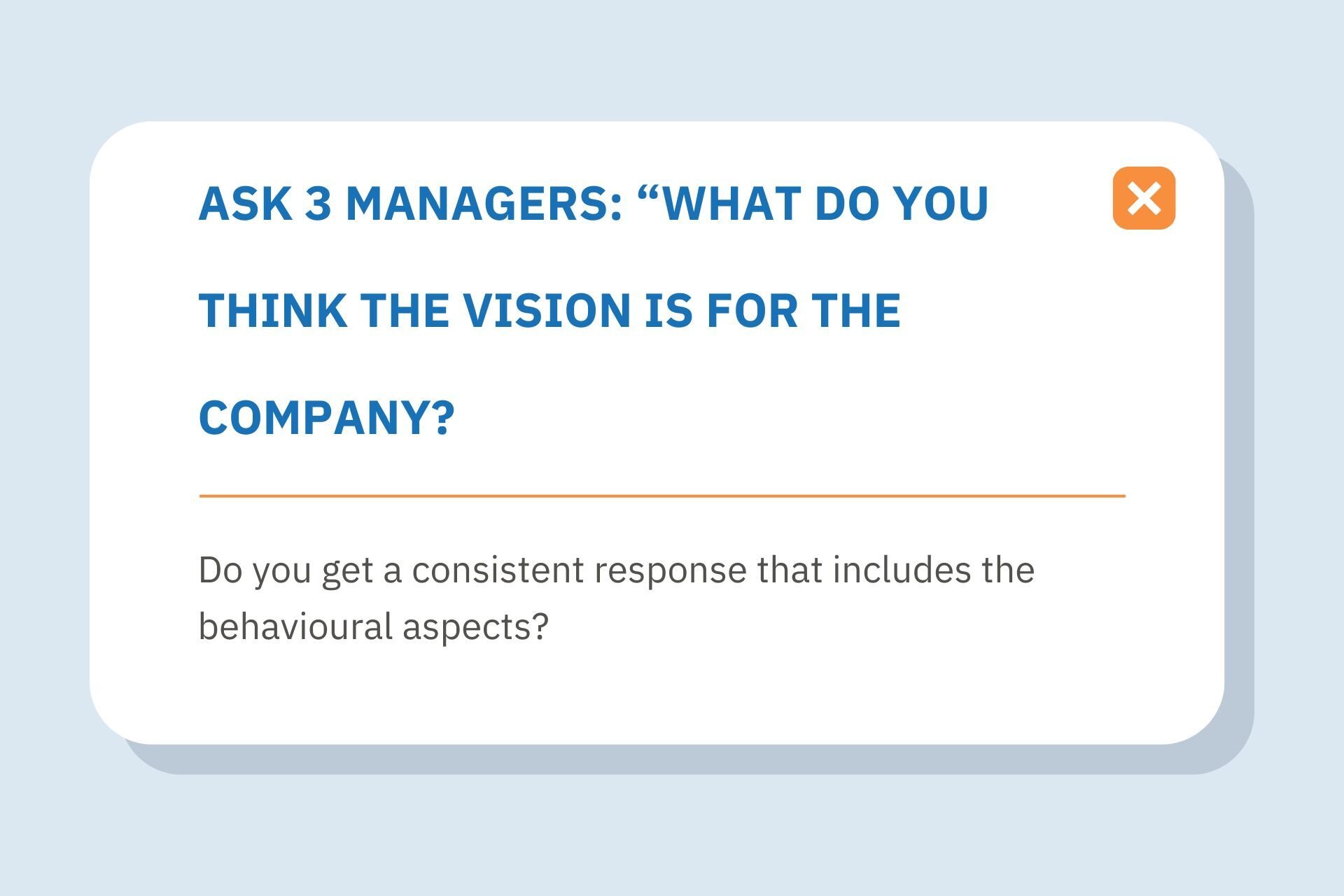
Ask 3 managers: "What do you think the vision is for the company?" Do you get a consistent response?
2. Current priorities
What matters next. You may be away for a week, and month or perhaps longer. The point is, people have clarity on what’s got to be done to achieve the immediate goals, what matters now.
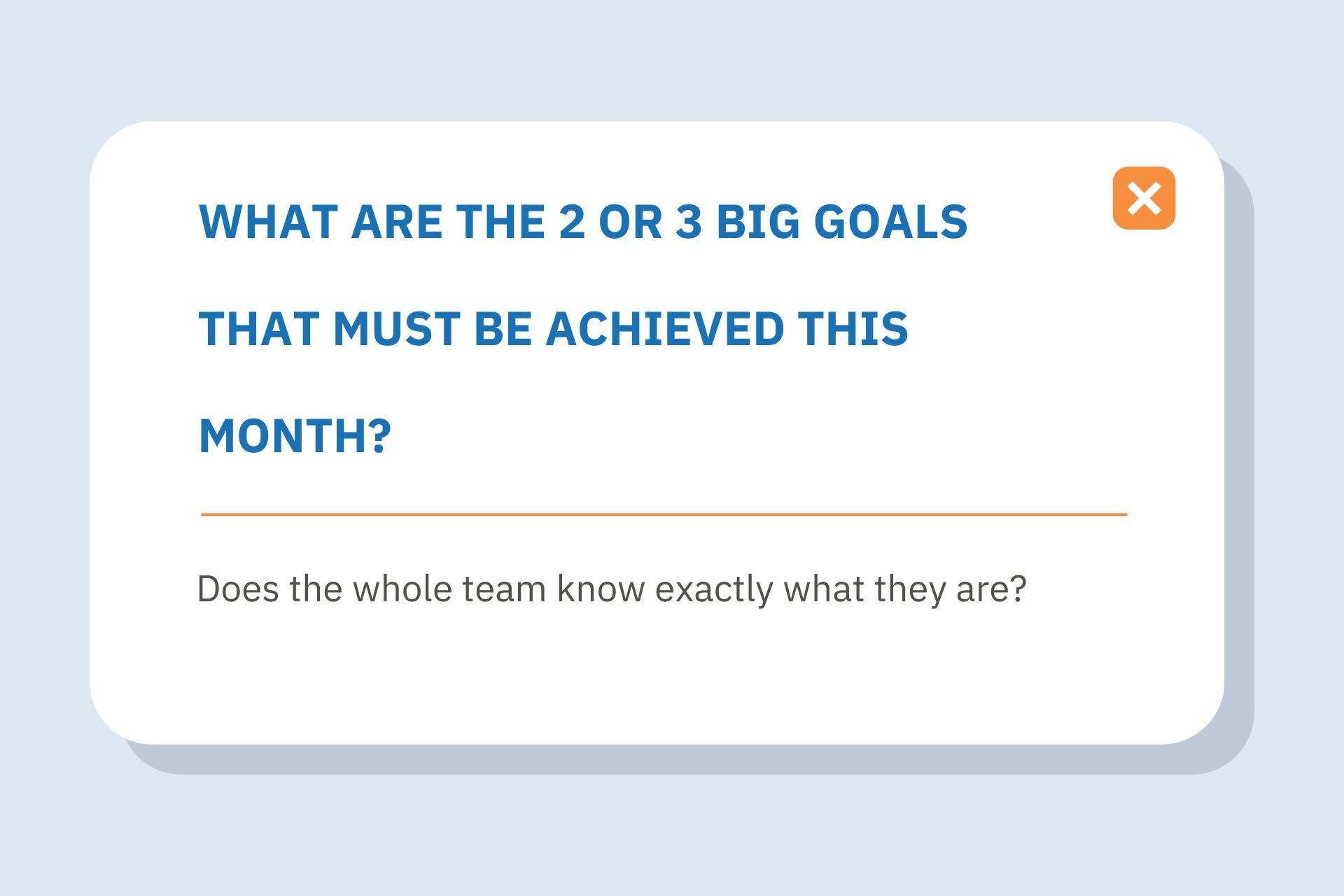
It’s something we review every month with members around the TAB Board – what are the objectives for the next month. Not the whole year, not the quarter… just the big rocks that have to get done this month.
- Are we protecting cash, improving margin or increasing market share?
- Are we willing to take on more work if it means stretching capacity and pushing the team harder?
- Do we go for a project and take on risk when we don’t have clarity on all aspects?
Over time, those repeated goals, typically 2 or 3, shape behaviour and build momentum that last well beyond your own presence. When some of those priorities bump up against each other, they know the immediate goals to hit. Not at any cost, but when tight decision have to be made.
A useful discipline is to identify three to five current priorities and keep repeating them until they shape behaviour. Without that clarity, people are either left guessing, attempt to do it all (and succeed at none of it), or just bury or escalate the decision.
3. Decision principles
This is where strategy starts to become practical and true team alignment excels.
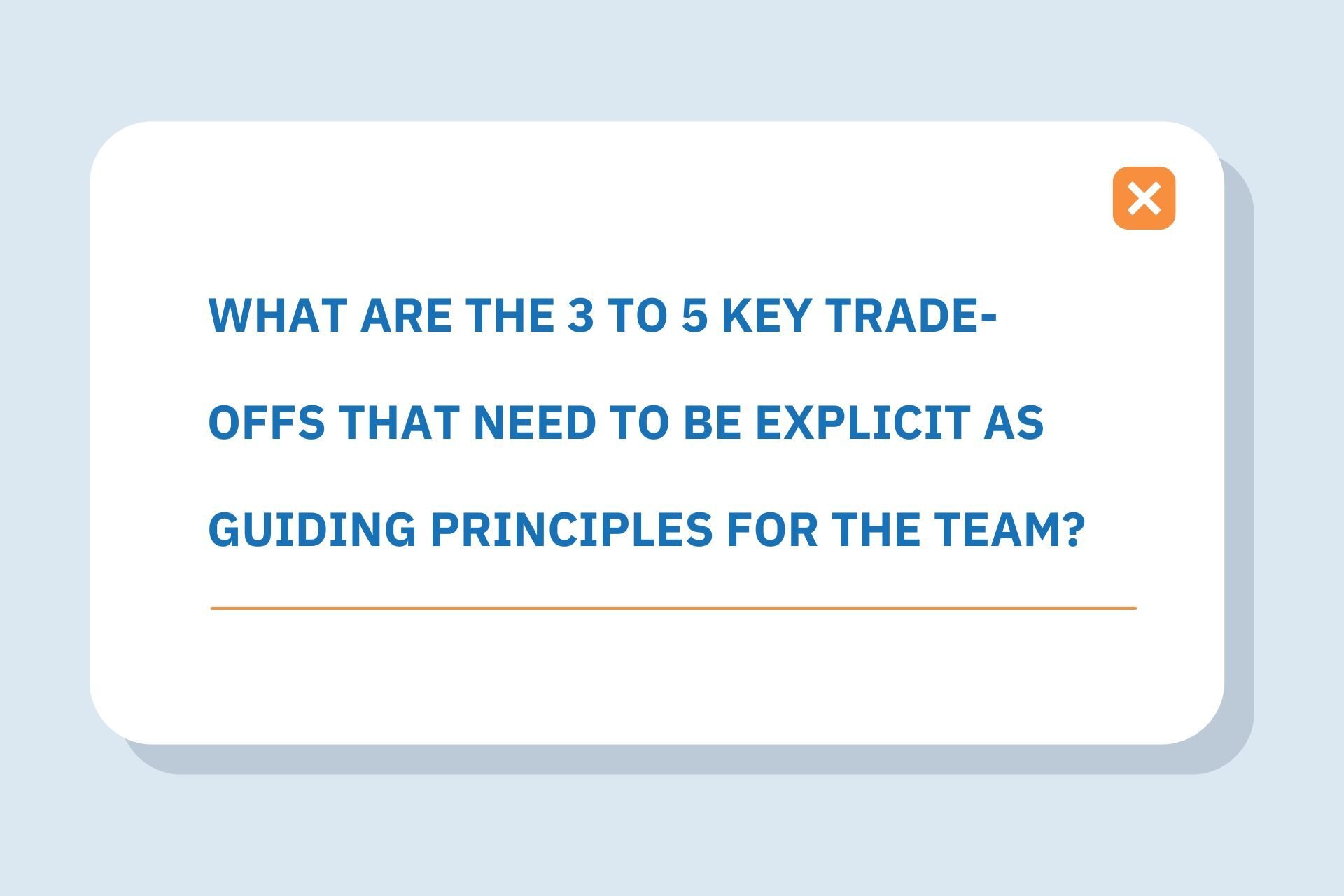
These are not soft, grey or vague. They are clear principles that are lived by and that can be applied to any actual decisions that have to be made. Decision principles help people make trade-offs without needing constant approval.
Here’s a couple of decision principles that I’ve found effective:
Customer trust comes before short-term convenience
It meant that when we were pitching we didn’t make commitments didn’t have a genuine plan behind them. There was no “bait and switch” to win the deal.
Quality and customer service come before speed
We didn’t ship product we knew had quality issues. We didn’t release code without rigorous testing.
These principles will be different for every business. The point is not to create a long list. The point is to define the few principles that should guide decisions and enable the team to make the right decisions without needing you.
I once worked with a business lead by Pete. The team joked that they should all wear WWPD wrist bands (and no, in case you are wondering, Pete couldn’t walk on water). It was a signal, not explicit, but a mode of operating that the team had internalised how the business thought.
4. Decision rights
We give people their roles, responsibilities and objectives. We make it clear time and again, from the front and in 1-2-1’s. We say “take ownership” or “be more proactive”, but they still hesitate.
Why? They lack confidence. Not in themselves, but in their empowerment.
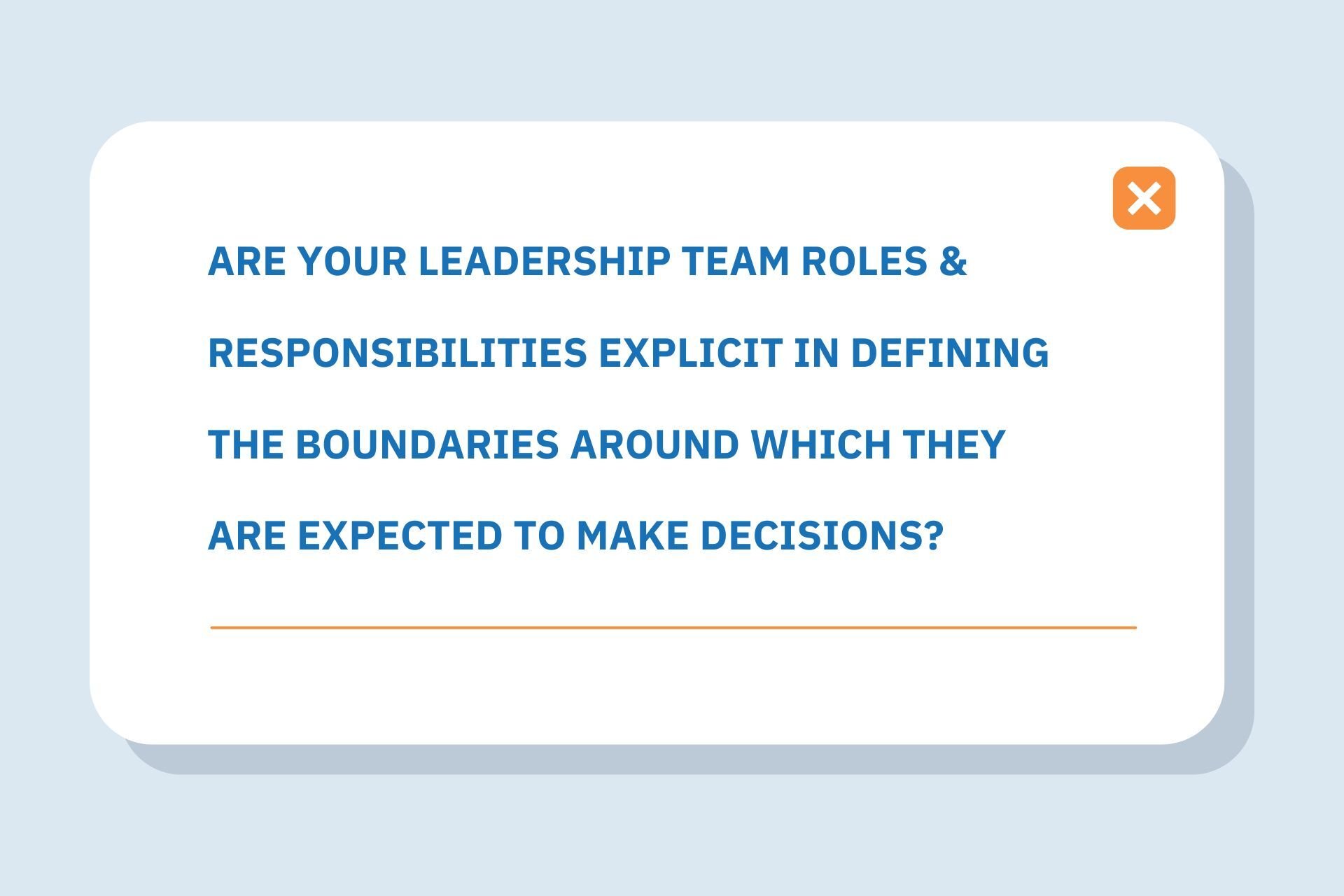
What are they genuinely allowed to decide?
Where does their responsibility start and stop?
What can a manager approve without checking?
What budget can they commit?
What customer issue can they resolve?
What can they change?
Clear decision rights reduce uncertainty. They also reduce frustration.
Conversely, you also protect from people going too far and overstepping the mark.
I once emailed the PE investors of the firm I worked for following a presentation that I knew left them thinking and feeling in a way that wasn’t what I had intended.
The CEO was not happy that I’d gone straight by him! I got away with it because the email was a good one, but I knew I wouldn’t get away with it again! The boundaries were clear after that.
If you want people to act without you, define the space in which they are free to act.
5. Consistent Support and Review
Empowerment does not mean “never contact me”. It means people know what they can decide, what they should escalate and what counts as a genuine emergency.
It means granting the right permission to the team AND shifting your role from approving everything to reviewing, coaching and improving judgement over time.
I had a critical situation with a very high profile client.
Right across all their European stores every single card payment made that day had been processed twice. That £1100 laptop came up as £2200 on a customer’s bank statement, for thousands of customers!
I was managing the escalation from late afternoon well into the night (they were US West Coast based) … but couldn’t raise the senior management the client wanted to speak to. And worse, there was ambivalence after the event.
Managers tell. Leaders show. The best leaders coach and are there to support not leave you in a hole..
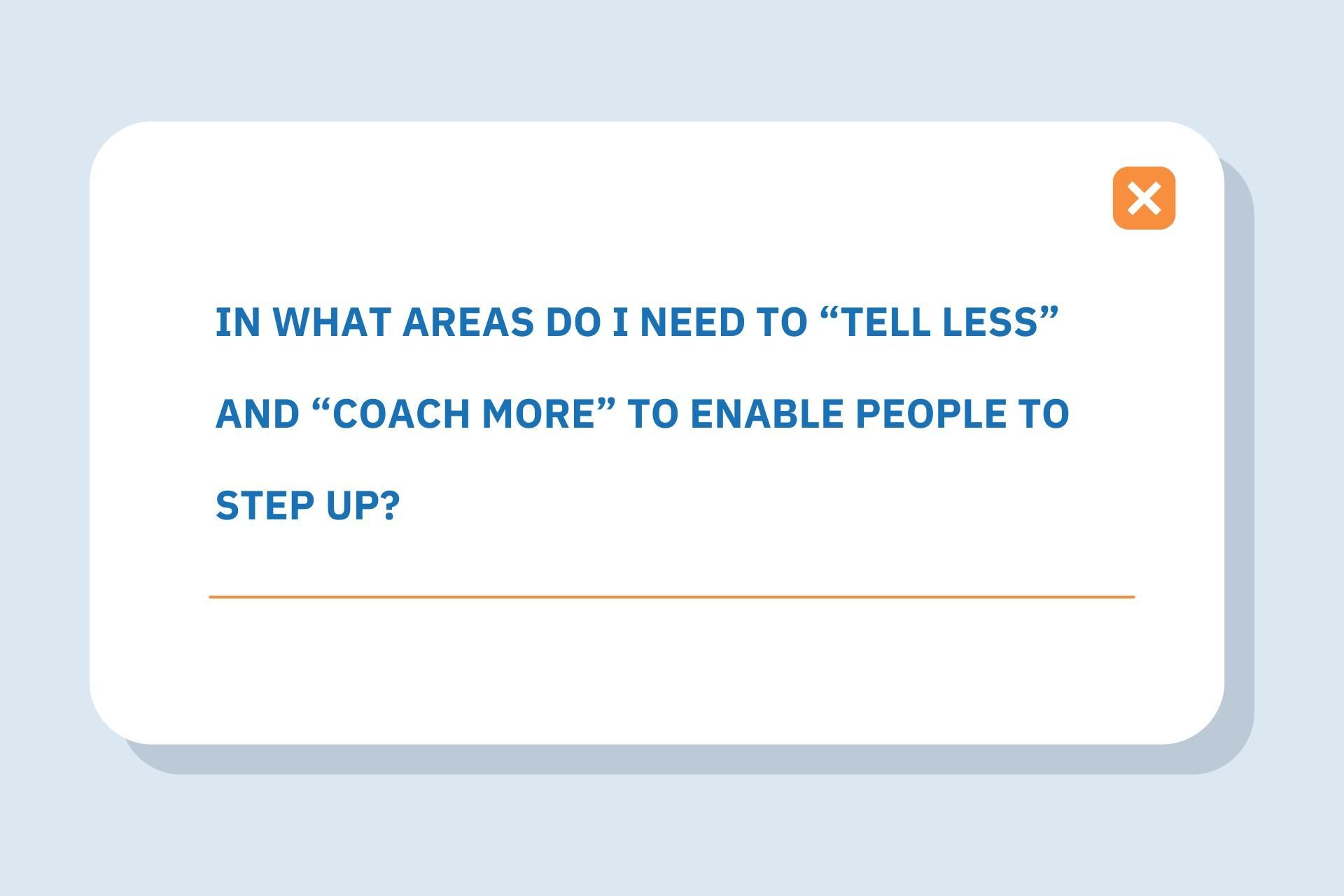
What does coaching look like? Instead of asking, “Why did you do that?”, better questions might be:
What decision did you make?
What principle guided it?
What options did you consider?
What happened as a result?
What would we do differently next time?
This creates the space to learn and develop without pulling every decision back to you. It provides people with the confidence to take some risk, make mistakes and learn, without fear.
Over time, the quality of decisions improves.
The Coaching Habit by Michael Bungay Stanier is a good book to learn more on this.
The real test of strategy: can your team act?
Most owners do not build their business because they want every decision to depend on them forever.
They want to create something that works. Something that grows. Something that gives customers confidence, gives people responsibility and gives the owner more freedom rather than less.
That does not happen by accident.
It happens when vision, priorities, decision principles, decision rights and accountability all work together.
So perhaps when you are next away… test your strategy and team alignment by seeing what happens when you are not there.
- Can your team act?
- Can they make good decisions?
- Can they keep the business moving?
If the answer is yes, your strategy is becoming part of the business and effective team alignment is developing.
If the answer is no, the issue may not be the quality of your people. It may be that they don’t know their decision rights or that too much of the strategy still lives in your head.

Posted by Simon Wilson
With 30 years of experience spanning client-facing and leadership roles in Finance and Technology - from global corporations to start-ups - Simon Wilson now works on supporting SME owners and leaders in Gloucestershire and the Cotswolds with TAB.
Frequently Asked Questions
What is team alignment in a business?
Team alignment is when everyone understands where the business is heading, what matters most right now and how to make decisions that support the business strategy without constantly referring back to the owner.
True team alignment goes beyond agreeing with the company vision. An aligned team understands the priorities and decision-making principles that allow people to act confidently, even when you, the business owner, is not available.
Why does my team still rely on me to make every important decision?
If every important decision comes back to you, the problem is not necessarily your people. More often, it is a lack of strategic alignment.
Many business owners unintentionally become the default decision-maker because the direction and decision rights have never been made clear. When employees are unsure what they can decide, asking the owner feels like the safest option.
How do you know if your team is truly aligned?
A simple test is to ask yourself what happens when you're not there.
If the business continues to make good decisions, solve problems and move towards its objectives without waiting for your approval, your team is likely to be well aligned.
If work slows down, decisions stall or everyone waits for you to return, your business strategy may still exist more in your head than throughout the organisation.
What is strategic alignment and why is it important?
Strategic alignment means ensuring your people, priorities, processes and day-to-day decisions all support the overall business strategy.
Without strategic alignment, teams often receive mixed messages and employees struggle to know which priorities should come first. This leads to slower decision making, inconsistent execution and increased dependence on the business owner.
Why does my business strategy fail to deliver results?
A business strategy rarely fails because the plan is poor. More often, it fails because people do not know how to apply it in everyday decisions.
Strategy only creates value when employees understand the current priorities, have clear decision rights and can make consistent choices without relying on senior leaders to interpret every situation.
How can business owners build a more aligned team?
Building an aligned team starts with giving people more than a vision.
Employees need clarity on where the business is heading, what the immediate priorities are, how decisions should be made, what authority they have and regular coaching to improve their judgement. Over time, this creates greater confidence and a business that depends less on the owner.
How can TAB help improve team alignment and strategy execution?
TAB helps business owners move beyond creating a business strategy to ensuring it is consistently executed across the organisation.
Through monthly peer advisory boards, one-to-one business coaching and strategic planning programmes, TAB helps leaders to build businesses that can make good decisions without relying on one person.
Related articles

Company Culture Examples: What SMEs Can Learn from Real Businesses
Discover real company culture examples and practical tips to build a thriving workplace in your small or medium-sized business.

10 Proven Strategies for Organic Business Growth
Discover effective strategies for achieving organic business growth. Boost your business' success with actionable tips and insights for sustainable growth.

Business Analysis Tools: 5 Proven Tools & Techniques
Learn how the right business analysis tools can transform decision-making, improve results and help business owners achieve lasting growth.