


Cash flow management is one of the most critical disciplines for any growing business and is often the reason for sleepless nights as business owners toss and turn, wondering how to improve the bottom line.
While many business owners focus on turnover and profit, it’s ultimately cash flow that determines how much you can scale with confidence.
As your business grows – bringing with it more people issues, bigger decisions and higher risks – managing cash flow effectively becomes less about tracking numbers and more about improving your leadership and getting ahead of the game when it comes to planning.
If you’re managing a team, juggling supplier payments and planning for growth, improving cash flow isn’t about quick fixes. It’s about building control and consistency across your business.
In this article:
- What is cash flow management?
- Why cash flow management becomes critical as you grow
- Common cash flow challenges in growing businesses
- A structured framework for cash flow control
- Key components of effective cash flow management
- Common mistakes that limit cash flow control
- Why cash flow management is a leadership discipline
- Share your cash flow woes and finally take control
- Frequently asked questions on cash flow management
What is Cash Flow Management?
As a business owner with a growing business, you’ll know that cash flow management is the process of tracking, analysing and optimising the money moving in and out of your business to ensure you can meet obligations and can support growth.
It involves:
- Monitoring incoming revenue and outgoing costs
- Forecasting future cash positions
- Making informed financial decisions
👉 In simple terms: it’s about ensuring your business has the right amount of cash, at the right time, for the right decisions. But you already know that so what about cash flow management when the best thing happens – your business starts to grow?
Why Cash Flow Management Becomes Critical as You Grow
In the early stages of a business, cash flow is often managed reactively.
But the dynamics of cash flow management – once you have a team, typically 5+ employees – change:
- Payroll becomes a fixed, non-negotiable cost
- Supplier relationships become more complex
- Investment decisions carry greater risk
- Timing gaps between income and expenditure widen
At this stage, many business owners experience a shift:
The business may be profitable, but cash still feels tight or unpredictable, and if you’re honest, you can’t quite get your head round it.
This isn’t unusual. It’s a sign that your business has reached a level where informal financial management is no longer enough.
Common Cash Flow Challenges in Growing Businesses
As complexity increases, so do the risks. Some of the most common challenges include:
- Late payments from customers
- Lack of forward visibility (no reliable forecast)
- Rising overheads without structured control
- Cash tied up in stock or work in progress
- Short-term decision-making under pressure
Any of this sound familiar? These challenges rarely exist in isolation, they tend to compound over time and left unaddressed, they limit your stability and your ability to grow.
If this is you, you’re in the right place and you’re clearly serious about gaining control of your cash flow to protect yourself, your employees and your business growth. So, let’s get into how to cash flow management at its finest.
The TAB Approach: A Structured Framework for Cash Flow Control
For many business owners, the turning point comes when cash flow is no longer managed tactically, but strategically.
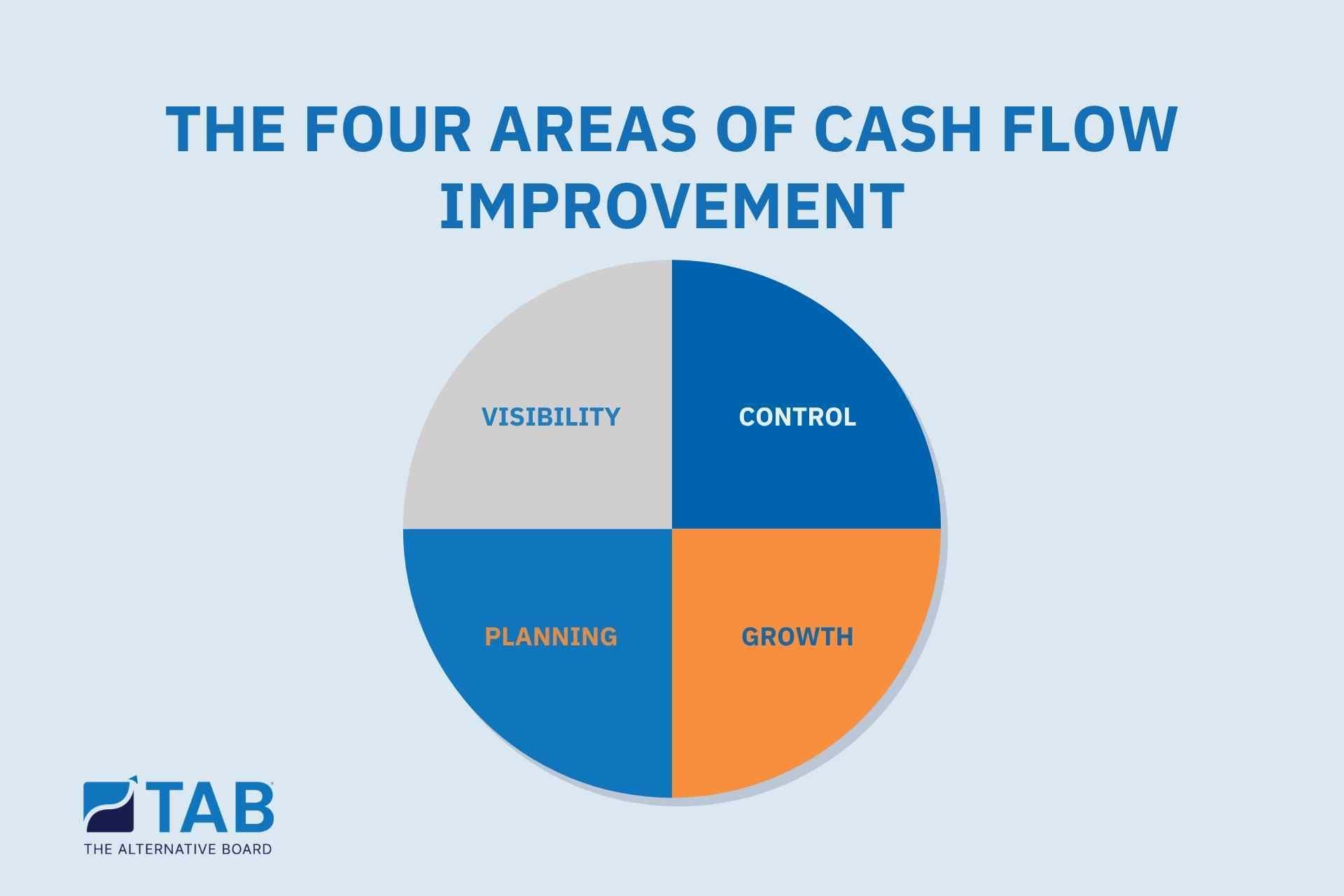
At TAB, we typically see cash flow improvements coming from focusing on four key areas:
1. Visibility
Understanding exactly where your business stands financially.
- Clear, up-to-date financial data
- Regular review of key metrics and financial lagging KPIs
- Transparency across the leadership team
Without visibility, decision-making is always reactive.
2. Control
Putting systems in place to manage how cash moves through the business.
- Defined payment terms
- Structured cost management
- Consistent financial processes
Control reduces unpredictability.
3. Planning
Looking ahead to anticipate challenges and opportunities.
- Cash flow forecasting
- Scenario planning
- Aligning financial decisions with business goals
👉 Planning turns uncertainty into informed decision-making.
4. Growth
Using strong cash flow as a platform for sustainable expansion.
- Investing with confidence
- Scaling operations effectively
- Supporting long-term strategy
Growth becomes intentional, not accidental.
Key Components to Effective Cash Flow Management
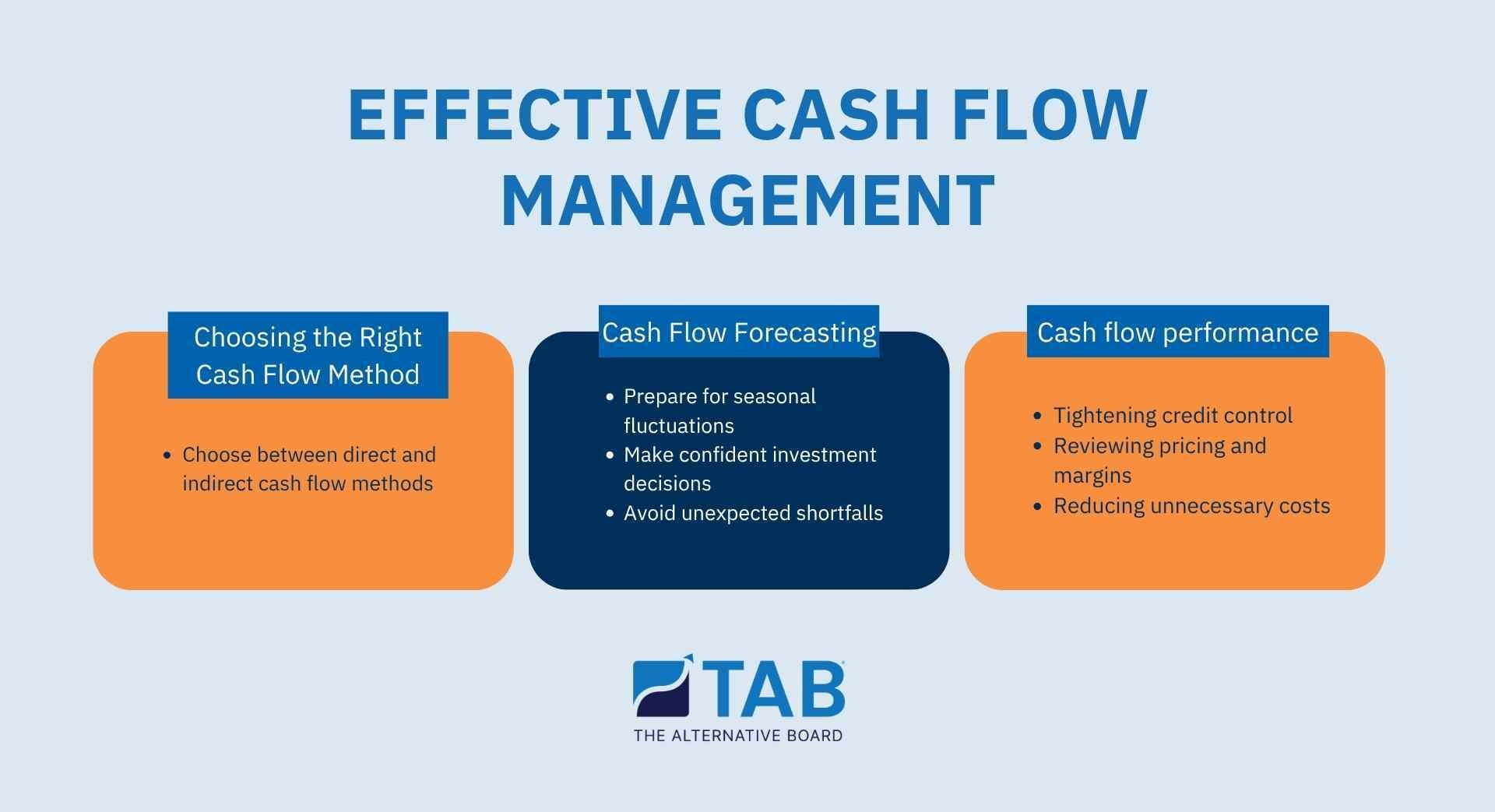
To build a more structured approach, there are several core areas every growing business should focus on:
Cash Flow Forecasting
A cash flow forecast provides a forward-looking view of your finances, helping you anticipate gaps and plan accordingly.
It allows you to:
- Prepare for seasonal fluctuations
- Make confident investment decisions
- Avoid unexpected shortfalls
👉 Learn more about cash flow forecasting for a growing business.
Improving Cash Flow Performance
Managing cash flow isn’t just about visibility, it’s about actively improving it.
This includes:
- Tightening credit control
- Reviewing pricing and margins
- Reducing unnecessary costs
👉 Explore practical strategies to improve cash flow
Choosing the Right Cash Flow Method
How you track and report cash flow also matters.
Understanding the difference between methods can improve clarity and decision-making:
👉 Read more on direct vs indirect cash flow methods
Common Mistakes That Limit Cash Flow Control
Even well-established businesses can fall into patterns that restrict cash flow, and we don’t want that to be you. Here are the common mistakes that limit cash flow control:
- Relying on profit as the primary performance metric
- Managing cash flow reactively rather than proactively
- Failing to review financial data regularly
- Allowing inefficiencies to build as the business grows
These issues often arise not from lack of effort, but from lack of structure.
Why Cash Flow Management Is a Leadership Discipline
It’s important for you as a business owner of a growing enterprise to recognise that cash flow isn’t a finance function, it’s actually a leadership responsibility. This a crucial mindset shift you need to make.
Cash flow influences:
- Strategic decision-making
- Risk management
- Growth planning
- Team confidence and strategic alignment
As your business grows, improving cash flow is less about working harder; it’s more about building sustainability, gaining visibility and making better decisions.
Final Thought – Share Your Cash Flow Woes and Finally Take Control
Cash flow management isn’t just about keeping the business running, it’s about creating the conditions for sustainable growth.
With the right structure, systems and perspective, it becomes one of the most powerful tools you have as a business owner.
But we get it, cash flow can be hard to tackle alone.
That’s why a business owner advisory board – a group of like-minded business owners who have seen it all before – can be a game-changer when it comes to unpacking issues like cash flow. We’ve seen countless TAB members, who are all leading growing businesses like you, take control of their cash flow and overcome their sleepless nights through our membership benefits.
So, why not explore the opportunity more? Enquire about becoming a TAB member. It might be the best business decision you make this year.
Frequently asked questions on cash flow management
What is cash flow management in simple terms?
Cash flow management is the process of tracking and controlling the money coming into and going out of a business to ensure it can meet its financial obligations and operate effectively.
Why is cash flow management important?
Cash flow management ensures a business can pay staff, suppliers and operating costs while investing in growth. Without it, even profitable businesses can struggle financially.
How can a business improve cash flow management?
Businesses can improve cash flow management by forecasting cash flow, tightening credit control, managing costs, and implementing structured financial processes.
What are the biggest cash flow risks for growing businesses?
The most common risks include late payments, lack of forecasting, rising overheads and poor financial visibility, especially as operational complexity increases.
Related articles

How to improve cash flow in a growing business (5+ Employees)
Cash flow is one of the most common, and most misunderstood, challenges facing growing businesses. Find out how to improve and take control of your cash flow.

Cash Flow Forecasting: The Ultimate Guide for Business Success
Master cash flow forecasting for growing business success. Explore techniques, tips and a template to navigate financial challenges and opportunities effectively.

Direct vs Indirect Cash Flow: What is the Difference and Which Should You Use?
Dive into direct and indirect cash flow management methods. Learn differences, advantages, applications, and how to choose the right one for your business.

Company Culture Examples: What SMEs Can Learn from Real Businesses
Discover real company culture examples and practical tips to build a thriving workplace in your small or medium-sized business.

10 Proven Strategies for Organic Business Growth
Discover effective strategies for achieving organic business growth. Boost your business' success with actionable tips and insights for sustainable growth.

Business Analysis Tools: 5 Proven Tools & Techniques
Learn how the right business analysis tools can transform decision-making, improve results and help business owners achieve lasting growth.